Buying lifting equipment without the guesswork
Being let down by incomplete, ambiguous or inadequate documentation is among the key findings of LEEA’s Procurement Survey published during Global Lifting Awareness Day (GLAD) 2026.
Most buyers have been let down by documentation, according to an initial LEEA survey of procurement and buying professionals, conducted across seven countries (UK, US, Singapore, Taiwan, New Zealand, UAE and Chile), spanning construction, manufacturing, energy, ports and events.
The survey reveals that 67% had accepted product documentation that later proved incomplete, ambiguous or inadequate. Some caught it before any incident, while others were unaware of any consequence.
With just 14% of respondents being “very confident”, the rest see occasional or significant gaps. Confidence that documentation provides them with everything they need to make an informed decision and specify the right product is clearly shallow.
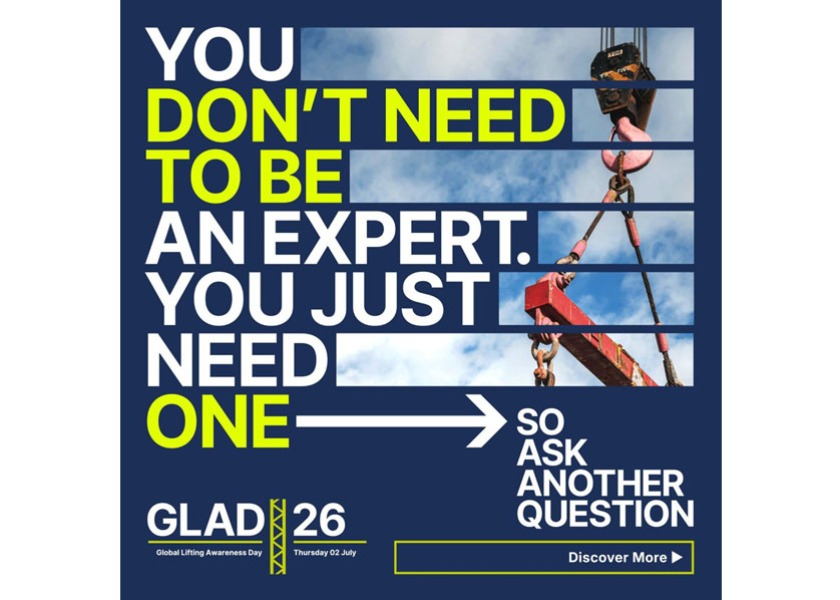
Fortunately, buyers know what would help, and this is encapsulated in the Global Lifting Awareness Day 2026 message: not all lifting equipment is created equal, and neither is the information that comes with it. What’s required are clearer standards, a plain-language guide to what they are entitled to receive and a checklist of questions to ask before ordering. If you're buying lifting equipment, you shouldn’t have to guess – ask another question.
Given the majority of the respondents were not in fact Lifting Equipment Engineers Association (LEEA) members, the survey provides a useful perspective on the wider buyer market. The findings are indicative of buyer sentiment and closely mirror themes raised in a series of LEEA member roundtables held earlier this year. Reports on the survey’s summary and the roundtables can be downloaded at globalliftingawarenessday.com/downloads.
What’s missing?
The survey finds information gaps around fitness for purpose, not just paperwork. The most commonly missing details were environmental suitability (62%), maintenance, storage and operating limits (52%) and a clear statement of intended use and application limits (43%). This is exactly the information that tells a buyer whether a product is right for their job.
Verification is inconsistent. While most buyers rely on an approved, audited supplier list (57%) or check certificates against the standard (52%), 38% still accept the supplier’s own declaration and almost a quarter (24%) have no formal verification process at all. With only 10% citing trade-body membership, such as LEEA, as a check, this represents a clear opportunity to make membership a more recognised quality signal.
Cost pressure is real but not dominant. Most buyers said cost does not influence their documentation standards, but a substantial minority acknowledged it had at least occasionally been a factor in accepting equipment or paperwork they were not fully satisfied with. This echoes the “price beats quality” theme from the recent series of LEEA roundtables.
The supplier view in Australia and New Zealand
Alongside the Procurement Survey, a separate survey of manufacturers, distributors and technical authors in Australia and New Zealand examined the same issue from the supplier side, such as how products are marked and documented. Read together, the two show both ends of the same gap.
Summarising the findings of this smaller survey qualitatively, suppliers think that marking is fine yet they report that buyers misread it. Every supplier rated their own product marking as broadly adequate, but the same respondents consistently described buyers misunderstanding it. As one put it, documentation is generally suitable to comply, “but the quality is a differing story.” The gap is comprehension, not compliance.
Confusion surrounds technical language. The terms most often misunderstood were WLL versus SWL versus MBL versus lashing capacity (LC), duty and FEM classifications and configuration-specific capacities (choked, basket and multi-leg). When buyers order, they most often fail to specify the intended lifting method or configuration, the environmental conditions and whether the lift is routine or engineered. They also fail to ask for duty-cycle suitability, service life, maintenance and lifecycle cost and full traceability.
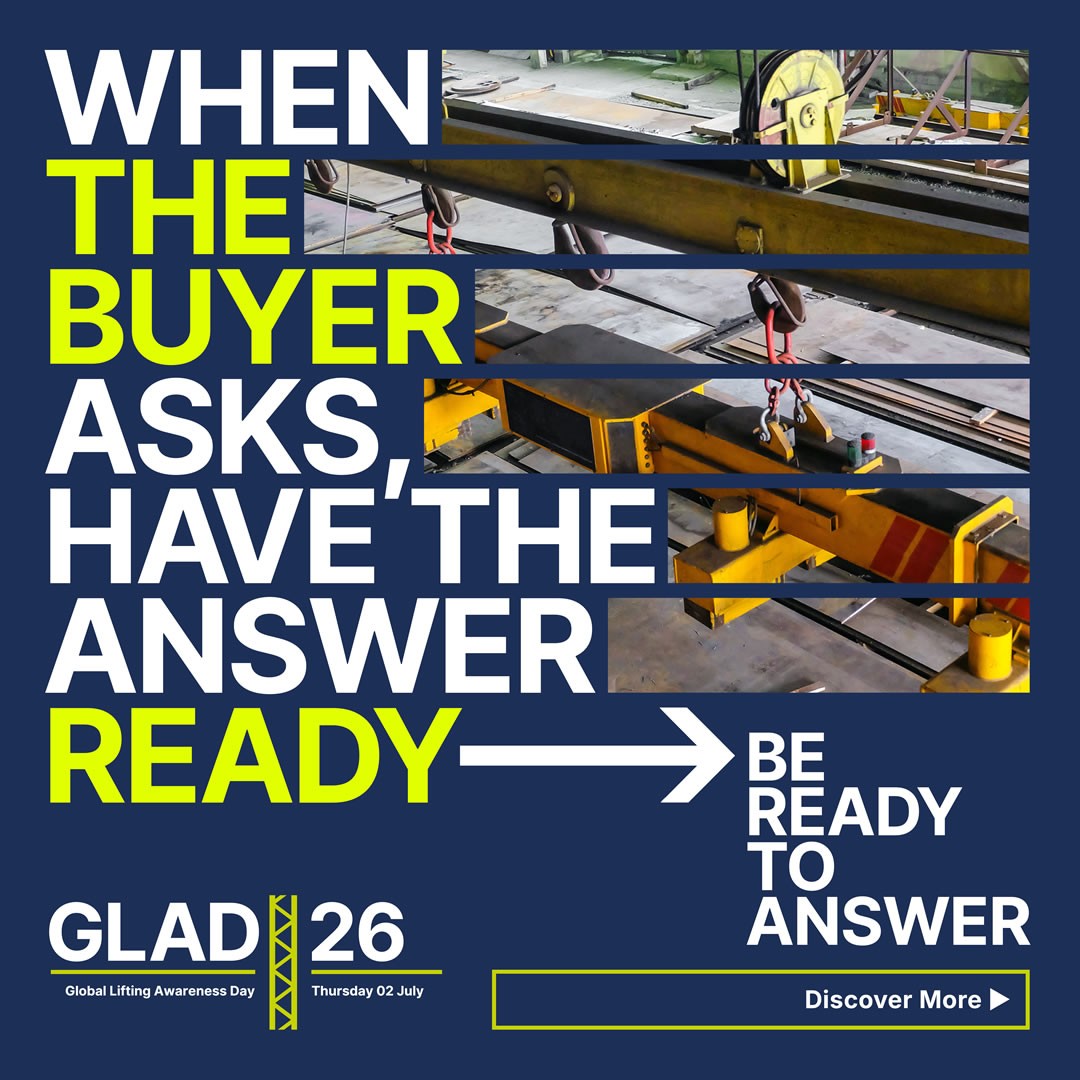
Asked what procurement most needs to understand, suppliers came to the same issue as the buyers: the difference between “compliant” and “fit for purpose.” However, suppliers want to help. Nearly all said they would use a LEEA marking and documentation checklist, and most would share it with their own customers as a benchmark, making suppliers active partners in the campaign, not just its subject. It is the flipside of the GLAD message: when a buyer asks another question, be ready to answer.
What this tells us
Buyers are not careless; they are under-equipped. They accept inadequate documentation not because they don’t care, but because the right information often is not there and there is no simple way to demand it. The single most requested fixes are clearer standards, a plain-language guide to documentation entitlement and a checklist of questions to ask.
This is precisely the behaviour GLAD 2026 is built to encourage: ask another question, with a membership body that helps buyers know which questions to ask, and which suppliers can answer them.